Sorry, no results.
Please try another keyword
Épisode
9 décembre 2025 -
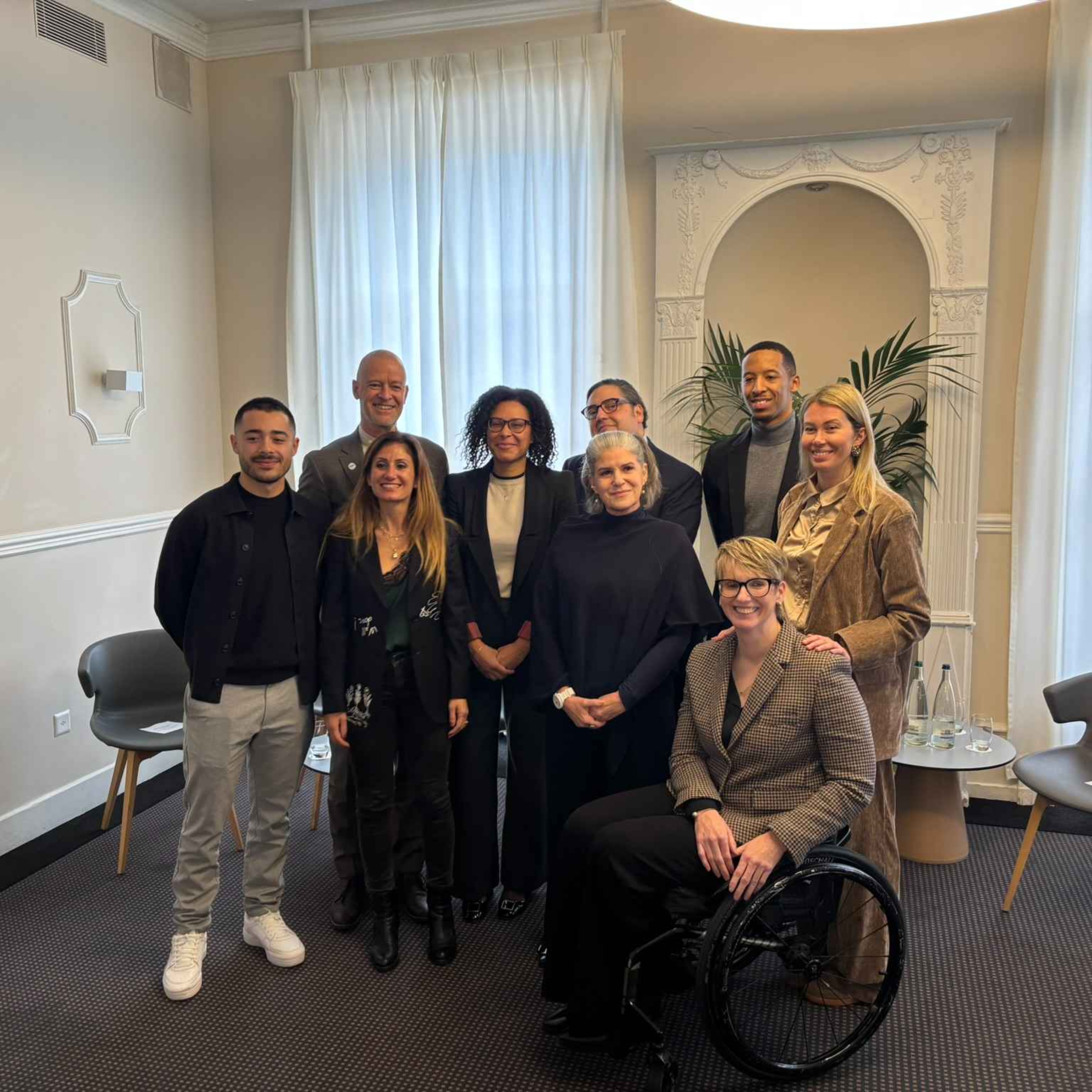
Late november, at the Vieux Bois restaurant of the Geneva Hotel Management School—just steps from the United Nations—a remarkable gathering took place. “From Santiago to Geneva – Advancing Inclusive Sport and Physical Education,” organized by UNESCO, brought together experts, athletes, and leaders committed to inclusion in sport.Among the speakers were...
Late november, at the Vieux Bois restaurant of the Geneva Hotel Management School—just steps from the United Nations—a remarkable gathering took place. “From Santiago to Geneva – Advancing Inclusive Sport and Physical Education,” organized by UNESCO, brought together experts, athletes, and leaders committed to inclusion in sport.Among the speakers were Bea Stadler, co-director of Swiss Inclusive Sport; Sebastian Mozer, president of Swiss Open Geneva; Raymon Blondel, president of the European Paralympic Committee; Theren Bullock, head of the FIBA Foundation; and Sabrina Bonanno of Decathlon. Paralympians such as Théo Gmür and Daniele Cassioli shared powerful stories of resilience. RTS journalist Odessa Blanc moderated the event, organized by Francesca Lualdi.The discussions highlighted how sport can drive inclusion, accessibility, and determination. Bullock described the FIBA Foundation as basketball’s social engine, linking global initiatives with local communities through “Basketball for Good,” focusing on health, gender equality, refugee inclusion, and disability sport.Basketball emerged as a democratic, unifying game. From street courts to international arenas, it bridges differences. Since James Naismith’s 1891 invention, the sport has grown to 650 million players and more than 3.3 billion fans. FIBA’s museum, the Patrick Baumann House of Basketball, traces this evolution. For Bullock, inclusivity is not an add-on but the sport’s core: “every player is a basketball player, regardless of ability.”Heroes shape the game—Michael Jordan, Kobe Bryant, Victor Wembanyama—but inclusion champions like Bea Stadler show impact in other ways. She described inclusion as a mindset: children play together naturally, focusing on strengths rather than limits. Wheelchair basketball balances abilities through a point system. Mozer noted that wheelchair tennis has gained visibility thanks to Grand Slam events, encouraging wider acceptance.Momentum for inclusive sport in Switzerland is rising. Landmark events such as the 2029 World Winter Games and the 2027 European Championships in Geneva will spotlight inclusion on a global stage. Blondel outlined the European Paralympic Committee’s efforts to foster inclusive societies, while Bonanno emphasized Decathlon’s commitment to accessible sports products as part of its core identity.The message was clear: inclusion in sport is intentional. It demands planning, collaboration, and long-term engagement to embed accessibility into culture and infrastructure. From grassroots actions to federations and adaptive design, the goal is universal—sport as a tool for equality, empowerment, and connection. Sport for everyone, without distinction.Text and photo by David GlaserOur galleries about olympic history related to internationalism is available here :genevemonde.ch/galleries/lausa...genevemonde.ch/galleries/lolym...For more information on UNESCO’s International Forum on inclusive sport and physical education : unesdoc.unesco.org/ark:/48223/... Hébergé par Acast. Visitez acast.com/privacy pour plus d'informations.
Afficher plus
Late november, at the Vieux Bois restaurant of the Geneva Hotel Management School—just steps from the United Nations—a remarkable gathering took place. “From Santiago to Geneva – Advancing Inclusive Sport and Physical Education,” organized by UNESCO, brought together experts, athletes, and leaders committed to inclusion in sport.
Among the speakers were Bea Stadler, co-director of Swiss Inclusive Sport; Sebastian Mozer, president of Swiss Open Geneva; Raymon Blondel, president of the European Paralympic Committee; Theren Bullock, head of the FIBA Foundation; and Sabrina Bonanno of Decathlon. Paralympians such as Théo Gmür and Daniele Cassioli shared powerful stories of resilience. RTS journalist Odessa Blanc moderated the event, organized by Francesca Lualdi.
The discussions highlighted how sport can drive inclusion, accessibility, and determination. Bullock described the FIBA Foundation as basketball’s social engine, linking global initiatives with local communities through “Basketball for Good,” focusing on health, gender equality, refugee inclusion, and disability sport.
Basketball emerged as a democratic, unifying game. From street courts to international arenas, it bridges differences. Since James Naismith’s 1891 invention, the sport has grown to 650 million players and more than 3.3 billion fans. FIBA’s museum, the Patrick Baumann House of Basketball, traces this evolution. For Bullock, inclusivity is not an add-on but the sport’s core: “every player is a basketball player, regardless of ability.”
Heroes shape the game—Michael Jordan, Kobe Bryant, Victor Wembanyama—but inclusion champions like Bea Stadler show impact in other ways. She described inclusion as a mindset: children play together naturally, focusing on strengths rather than limits. Wheelchair basketball balances abilities through a point system. Mozer noted that wheelchair tennis has gained visibility thanks to Grand Slam events, encouraging wider acceptance.
Momentum for inclusive sport in Switzerland is rising. Landmark events such as the 2029 World Winter Games and the 2027 European Championships in Geneva will spotlight inclusion on a global stage. Blondel outlined the European Paralympic Committee’s efforts to foster inclusive societies, while Bonanno emphasized Decathlon’s commitment to accessible sports products as part of its core identity.
The message was clear: inclusion in sport is intentional. It demands planning, collaboration, and long-term engagement to embed accessibility into culture and infrastructure. From grassroots actions to federations and adaptive design, the goal is universal—sport as a tool for equality, empowerment, and connection. Sport for everyone, without distinction.
Text and photo by David Glaser
Our galleries about olympic history related to internationalism is available here :
genevemonde.ch/galleries/lausa...
genevemonde.ch/galleries/lolym...
For more information on UNESCO’s International Forum on inclusive sport and physical education : unesdoc.unesco.org/ark:/48223/...
Hébergé par Acast. Visitez acast.com/privacy pour plus d'informations.
Pas de transcription pour le moment.
David Glaser
David Glaser
Vous devez être connecté pour soumettre un avis.
David Glaser
Hotelier Isabelle von Burg : The Art of Welcoming the World
16 décembre 2025 · 41:47
100 Years of Ideas : Martin Grandjean & Daniel Laqua on Intellectual Cooperation
09 décembre 2025 · 15:45
Saint-Marin, la plus ancienne république du monde
09 décembre 2025 · 29:51
Haïlé Sélassié à Genève : Un appel historique au droit international en 1936
02 décembre 2025 · 22:02
Entretien avec Patrick Clastres : De Coubertin à Coventry, les JO entre idéalisme, pouvoir et diplomatie
24 novembre 2025 · 1:00:19
Le Bureau Des Histoires
Mon copain veut que je sois une vraie femme
10 novembre 2026 · 18:50
Parle-moi
Marion Ranvier, Directrice Générale de la Contentsquare Foundation
16 juin 2026 · 30:24
First Player – Boardgame
Avant de Ranger… Forestry
15 février 2026 · 17:04
Lanterne Magique
Questions de cinéma : Nicolas Saada et les voix du septième art
21 juin 2026 · 1:24:10
Ekos Afrique
Les derniers jours de Patrice Lumumba — Le chimiste et le crocodile (2/6)
15 février 2026 · 16:35
Tant qu’il y aura du Wi-Fi !
Paris Games Week 2026 : nouveautés, jeux, invités… Le directeur nous dit tout !
18 octobre 2026 · 1:00:10
Outpostcast – For All Mankind en français
Du drame familial aux catastrophes spatiales ! Rupture & Bent Bird (commentaire S1 épisodes 8 et 9)
04 avril 2026 · 1:14:36
Filles Faciles
Skins – la série des ados perdus et des parents inaptes
03 septembre 2026 · 1:18:40
La Richesse des Différences… pour te comprendre et te sentir accepté !
Les subtilité entourant l’Authenticité pour sortir de la lourdeur de l’hypocrisie ! – E31
11 septembre 2026 · 1:05:20
À table avec l’Histoire
Maïs : Anatomie d’une dépossession
24 avril 2026 · 20:39