
Sorry, no results.
Please try another keyword
Épisode
14 juin 2024 -
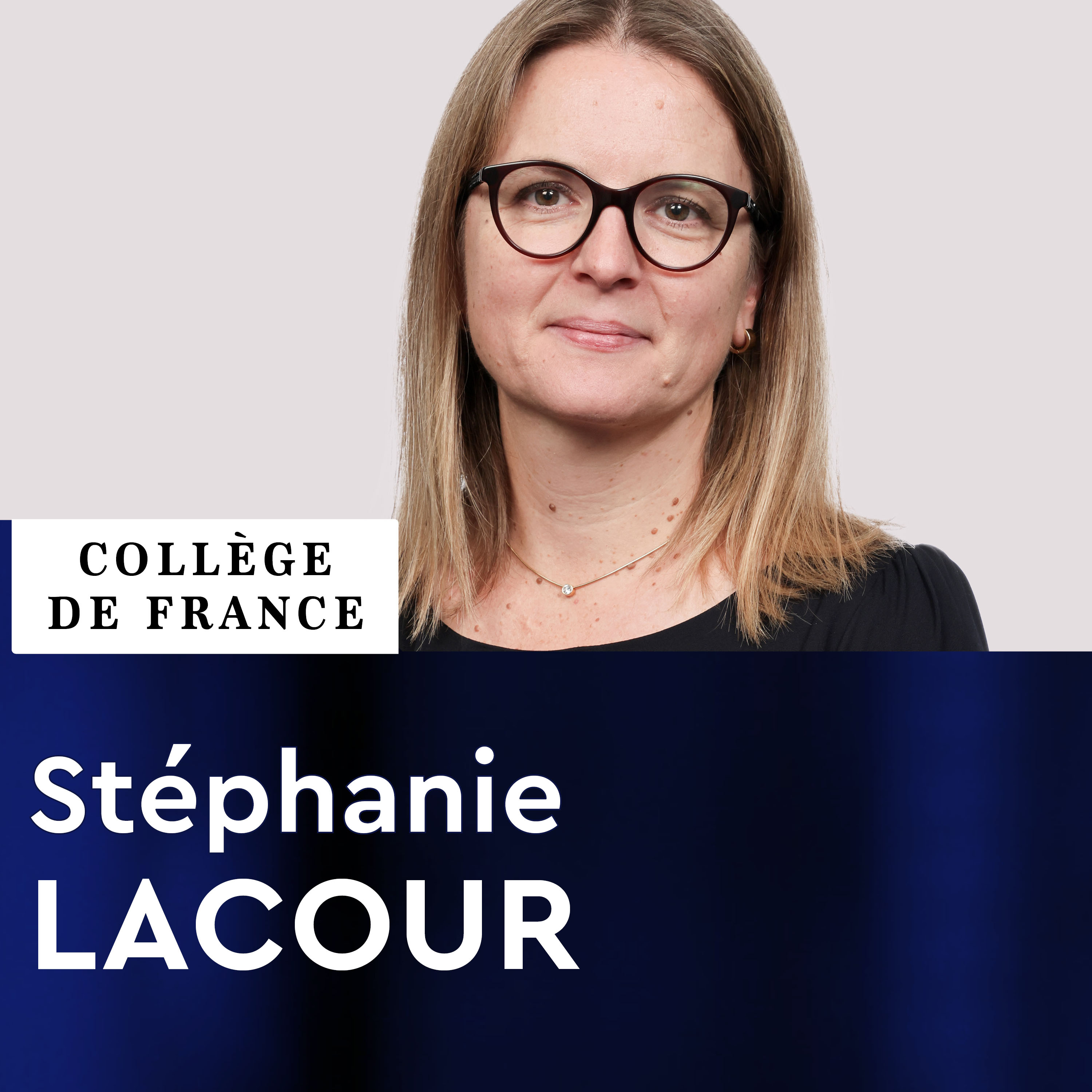
Stéphanie LacourCollège de FranceInnovation technologique Liliane Bettencourt (2023-2024)Année 2023-2024Colloque - La neurotechnologie : Ethics: A Global Compass for Responsible Research and Human Rights – Insights from OECD and UNESCO PerspectivesInnovating Responsibly: Neurotechnology Standards and Societal EthicsColloque coorganisé par Stéphanie Lacour, chaire Innovation technologique Liliane Bettencourt et Mme Karen Rommelfanger.Intervenant(s)Hervé...
Stéphanie LacourCollège de FranceInnovation technologique Liliane Bettencourt (2023-2024)Année 2023-2024Colloque - La neurotechnologie : Ethics: A Global Compass for Responsible Research and Human Rights – Insights from OECD and UNESCO PerspectivesInnovating Responsibly: Neurotechnology Standards and Societal EthicsColloque coorganisé par Stéphanie Lacour, chaire Innovation technologique Liliane Bettencourt et Mme Karen Rommelfanger.Intervenant(s)Hervé Chneiweiss, Research Director au CNRS, Neuro-Oncologist à l'Hôpital Universitaire Pitié-Salpêtrière, Président du comité d'éthique de l'InsermSince 2015, the OECD has convened a panel of experts to develop a framework for responsible research and innovation in the field of neurotechnologies. This effort culminated in Recommendation 457 in 2019. In France, this recommendation has been implemented through the development of a Charter, which is poised to become European-wide. Additionally, an interactive toolkit has been recently introduced. Concurrently, the UNESCO International Bioethics Committee released a report in 2021 on the ethical implications of neurotechnologies. These findings serve as the foundation for ongoing efforts to adopt a recommendation in 2025, which will serve as legislative groundwork for member states. We will compare and contrast the approaches of both organizations, in which we have actively participated.Hervé Chneiweiss (MD-PhD) is a neurologist and neuroscientist, senior scientist at CNRS, he has been involved in neurogenetic research on diseases such as cerebellar ataxias and then the molecular mechanisms involved in astrocyte phenotype and plasticity, and the development of brain tumors, their epigenetic and metabolic drivers. Technical approaches include proteomics, metabolism, epigenetics, cell cultures, animal models, single cell. He has published over 170 original scientific papers (h=55, i10 112). He is currently director of the Neuroscience Paris Seine-IBPS research center (CNRS/Inserm/Sorbonne University). Hervé Chneiweiss is also involved in bioethics, adviser for life sciences and bioethics to the Minister of Research and Technology (2000-02), member of the Scientific Council of the French Parliamentary Office for Scientific and Techniques assesment (2003-16), member of the French National Ethics Committee (2013-17), member and chairman of the UNESCO International Bioethics Committee (2014-21), member of the WHO committee on Human genome governance (2019-21), expert for OECD on neurotechnology (since 2015), and currently as chairman of the Inserm Ethics Committee, EMBL Ethics Board, EBRAINS EESC and co-chair AHEG UNESCO for recommendation on neurotechnologies. Former editor in chief of Medicine/Sciences (2006-16). He has published several books for the general public (latest: Notre cerveau, L'Iconoclaste, 2019).
Afficher plus
Stéphanie Lacour
Collège de France
Innovation technologique Liliane Bettencourt (2023-2024)
Année 2023-2024
Colloque - La neurotechnologie : Ethics: A Global Compass for Responsible Research and Human Rights – Insights from OECD and UNESCO Perspectives
Innovating Responsibly: Neurotechnology Standards and Societal Ethics
Colloque coorganisé par Stéphanie Lacour, chaire Innovation technologique Liliane Bettencourt et Mme Karen Rommelfanger.
Intervenant(s)
Hervé Chneiweiss, Research Director au CNRS, Neuro-Oncologist à l'Hôpital Universitaire Pitié-Salpêtrière, Président du comité d'éthique de l'Inserm
Since 2015, the OECD has convened a panel of experts to develop a framework for responsible research and innovation in the field of neurotechnologies. This effort culminated in Recommendation 457 in 2019. In France, this recommendation has been implemented through the development of a Charter, which is poised to become European-wide. Additionally, an interactive toolkit has been recently introduced. Concurrently, the UNESCO International Bioethics Committee released a report in 2021 on the ethical implications of neurotechnologies. These findings serve as the foundation for ongoing efforts to adopt a recommendation in 2025, which will serve as legislative groundwork for member states. We will compare and contrast the approaches of both organizations, in which we have actively participated.
Hervé Chneiweiss (MD-PhD) is a neurologist and neuroscientist, senior scientist at CNRS, he has been involved in neurogenetic research on diseases such as cerebellar ataxias and then the molecular mechanisms involved in astrocyte phenotype and plasticity, and the development of brain tumors, their epigenetic and metabolic drivers. Technical approaches include proteomics, metabolism, epigenetics, cell cultures, animal models, single cell. He has published over 170 original scientific papers (h=55, i10 112). He is currently director of the Neuroscience Paris Seine-IBPS research center (CNRS/Inserm/Sorbonne University). Hervé Chneiweiss is also involved in bioethics, adviser for life sciences and bioethics to the Minister of Research and Technology (2000-02), member of the Scientific Council of the French Parliamentary Office for Scientific and Techniques assesment (2003-16), member of the French National Ethics Committee (2013-17), member and chairman of the UNESCO International Bioethics Committee (2014-21), member of the WHO committee on Human genome governance (2019-21), expert for OECD on neurotechnology (since 2015), and currently as chairman of the Inserm Ethics Committee, EMBL Ethics Board, EBRAINS EESC and co-chair AHEG UNESCO for recommendation on neurotechnologies. Former editor in chief of Medicine/Sciences (2006-16). He has published several books for the general public (latest: Notre cerveau, L'Iconoclaste, 2019).
Pas de transcription pour le moment.
Collège de France
Collège de France
Vous devez être connecté pour soumettre un avis.
Collège de France
Colloque – La neurotechnologie : The OECD’s Work on Responsible Innovation in Neurotechnology
14 juin 2024 · 27:59
Colloque – La neurotechnologie : Navigating Ethical Translation of Neurotech that Benefits All
14 juin 2024 · 37:46
Colloque – La neurotechnologie : Scaling Neurotechnologies: The Interplay of Ethical, Regulatory and Market Dynamics
14 juin 2024 · 41:41
Colloque – La neurotechnologie : Learning from Experience: Integrating Effective Community Engagement into Neurotechnology Development
14 juin 2024 · 33:38
Colloque – La neurotechnologie : Panel Discussion
14 juin 2024 · 21:48
Sans détour
Rester « groundé » quand tout va trop vite
30 avril 2026 · 36:30
Grandir Nature Le Podcast
Allaiter son bébé… et donner son lait à d’autres : le témoignage de Éléa EP020
13 septembre 2026 · 22:50
PAS SAGE, Maylène Itçaina
Quand le corps devient boussole
20 mai 2026 · 1:14:03
M Bien Être Ayurveda
Méditation sur les points marmas Ayurvédiques
15 février 2026 · 26:38
LOLA ET BASTA !
1314 000 000 000 kg de TNT
14 février 2026 · 2:41:23
Versatile Podcast
Entraînement minimaliste et mouvement quotidien avec Léo Colognesi
29 mars 2026 · 43:26
Madame Pourquoi
Revenir au corps, la piste oubliée pour cultiver sa sécurité intérieure
26 avril 2026 · 1:05:48
Parole déployée
Art et identité
12 février 2026 · 10:40
You are Hormonal
Comprendre son cycle menstruel : éducation et symptothermie pour la santé hormonale des femmes
10 mars 2026 · 1:04:10
Pas très bavarde
42 – Je mesure ma valeur à tout ce que je fais (et ce n’est jamais assez)
16 septembre 2026 · 34:33